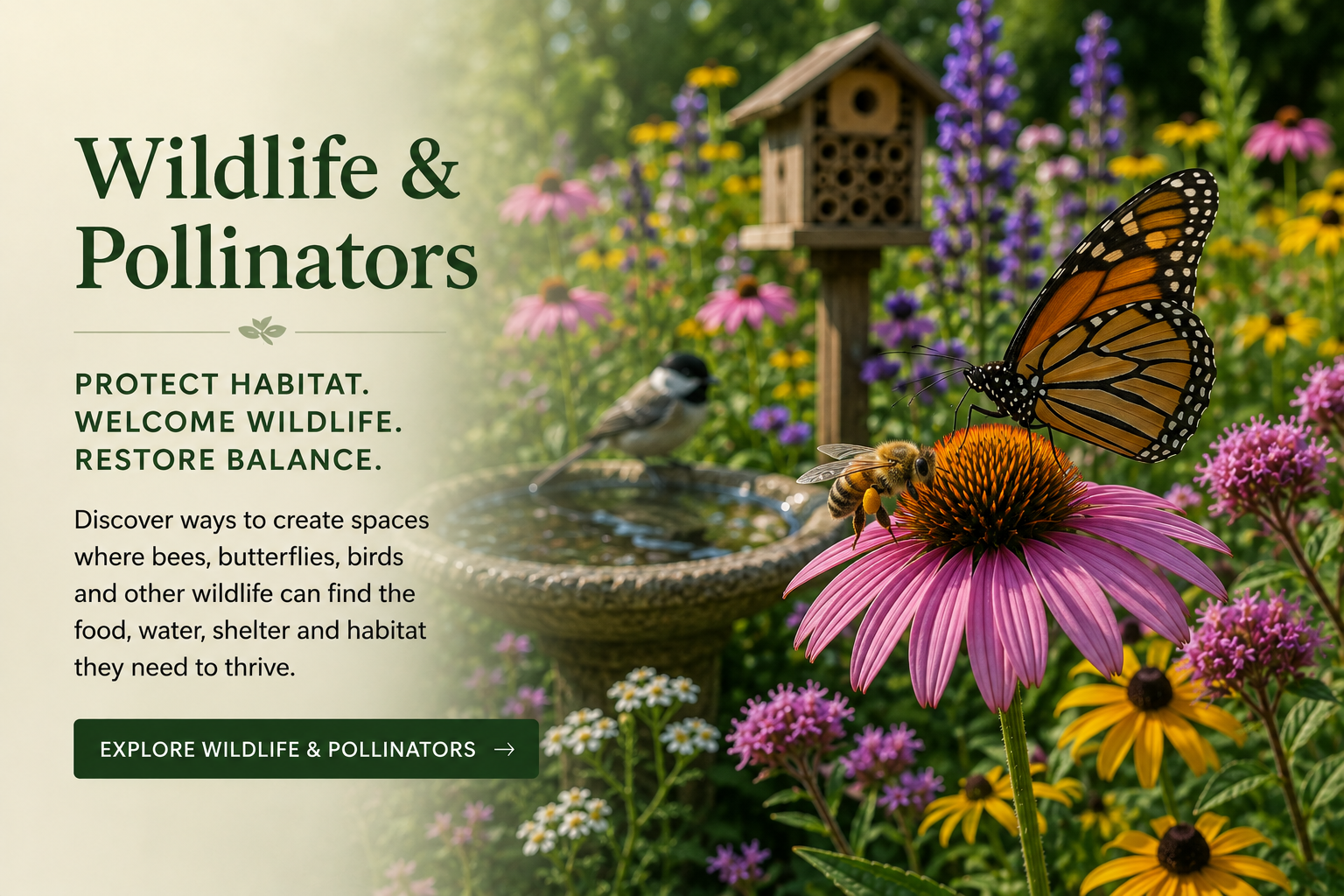
Wildlife & Pollinators
Protect habitat. Welcome wildlife. Restore balance.
A garden, backyard, neighborhood or community can be more than a place designed for people.
It can become a thriving oasis for wildlife as well.
Bees gathering pollen from flowers. Butterflies searching for host plants. Birds raising their young. Bats moving through the evening sky. Moths visiting flowers after sunset. Frogs calling from a pond. Native plants providing food and shelter throughout the seasons.
These relationships are not separate from restoration. They are the backbone of it.
Our Wildlife & Pollinators pillar explores how we can create healthier places for the creatures who share this world with us while rediscovering our own place within that living system.
Make Room for Life
Wildlife doesn't always need a vast wilderness.
Sometimes it needs a flower, a patch of native plants, a source of clean water, a tree left standing, a place to nest, a garden without unnecessary chemicals or a little darkness after sunset.
When enough of these small refuges exist across gardens, yards, farms and communities, they begin creating something much larger. These turn into connected places where life has room to return.
You don't have to create an entire wildlife sanctuary to participate.
Start with the space you have.
Bees & Responsible Beekeeping
Bees are among the most recognizable pollinators, but their importance extends far beyond honey.
They are part of the extraordinary relationships connecting flowering plants, food production, gardens and larger ecosystems.
Through Bees of Caprice, we're exploring even more ways to support bees while learning more about responsible beekeeping, pollinator habitat and a relationship with honey bees that puts the health of the colony first.
Our goal isn't simply to take something from the hive.
It's to understand how we can create a place where bees can thrive as well as the whole habitat.
Explore Bees of Caprice →
Beyond the Honey Bee
Honey bees are only part of the pollinator story.
Native bees, butterflies, moths, beetles, flies, hummingbirds and other animals participate in pollination, often in ways we never notice.
Supporting pollinators means thinking beyond a single species.
It means providing diverse flowers across the seasons, protecting nesting areas, growing native plants, eliminating unnecessary chemical use and creating landscapes where pollinators can find what they need throughout their lives.
A pollinator garden isn't just beautiful or something to extract what we want from it. It is working habitat and benefits the greater good of all in it.
Birds & Backyard Wildlife
Birds can become extraordinary garden partners.
They eat insects, spread seeds, contribute to healthy ecosystems and bring movement, sound and life into our landscapes.
And they aren't alone.
Squirrels, rabbits, frogs, turtles, bats and countless other creatures may share the spaces we create.
Wildlife-friendly gardening doesn't mean allowing animals to destroy everything we grow.
It means learning how to protect our food and gardens while creating space for wildlife, using thoughtful barriers, habitat design and cooperation rather than automatically treating every wild visitor as an enemy.
Native Plants & Habitat
One of the simplest ways to help wildlife is to grow some of the plants with which local wildlife evolved.
Native trees, shrubs, grasses and flowers can provide nectar, pollen, seeds, fruit, shelter and host plants for insects.
They can often be incorporated into existing gardens rather than requiring an entirely separate landscape.
A vegetable garden can have pollinator borders.
An orchard can include native flowers.
A patio can hold pollinator containers.
A backyard can contain both spaces for people and places for wildlife.
This overall habitat can be woven into the places where we already live and anywhere we want to introduce more life.
Wildlife After Dark
When daylight fades, another ecosystem awakens.
Bats take flight. Moths visit flowers. Frogs become more active. Owls begin hunting. Fireflies communicate across fields and gardens.
Protecting wildlife therefore doesn't stop at sunset.
Reducing unnecessary artificial light and preserving natural darkness can help protect the nighttime environment these species depend upon.
This is where Wildlife & Pollinators connects directly with our work to Restore the Night Sky.
Explore Restoring the Night Sky →
Water, Shelter & Safe Spaces
Food is only one part of habitat.
Wildlife also needs water, shelter and places to reproduce safely.
Depending on the space available, that might mean:
• Birdbaths or shallow water sources
• Small wildlife ponds
• Native shrubs and trees
• Nesting boxes
• Brush or natural areas
• Pollinator nesting habitat
• Flowers blooming across multiple seasons
• Places protected from unnecessary pesticides and chemicals
• Darker areas where nighttime wildlife can function naturally
A landscape doesn't have to look wild or neglected to support wildlife.
It can be beautiful, intentional and full of life.
Garden With Wildlife, Not Against It
The traditional response to wildlife in a garden is often to ask:
How do I keep everything out?
We want to explore a different question:
How can we protect what we're growing while still making room for the lives around us?
Fencing, row covers, thoughtful plant placement and other physical protections can safeguard food crops while other parts of the landscape provide habitat.
The goal isn't choosing between a productive garden and wildlife.
It's learning how both can exist within the same larger system.
Learn With Us
Our Wildlife & Pollinators Pillar continues to grow monthly through New Earth Conversations, workshops, guest experts, photography, practical projects and collaborations with people and organizations already doing this work.
We'll explore topics including:
Native plants and habitat restoration
Bees and responsible beekeeping
Butterflies and other pollinators
Bird-friendly landscapes
Wildlife gardening
Nighttime pollinators
Responsible outdoor lighting
Water and habitat
Living more cooperatively with wildlife
Some of these conversations will happen in our gardens.
Others will come from people who have spent years studying, protecting and working alongside each of these species.
There is always more to learn.
Begin With One Thing
Plant one native flower.
Put out clean water.
Leave part of the garden a little less tidy.
Stop using a chemical you don't really need.
Plant something for a caterpillar instead of only planting for the butterfly.
Protect a nesting place.
Turn off an unnecessary light.
Watch what arrives.
Because restoration doesn't always begin with a massive project.
Sometimes it begins when we make room for one more living thing.